


As a key supporting component for stable operation in power systems, the line reactor is not required for all operating conditions, yet it plays an irreplaceable role in scenarios with complex power grid environments, sensitive precision equipment, and long-term continuous operation. Its core value lies in harmonic suppression, surge current reduction, core equipment protection, and improved overall operational stability, making it widely adopted across various industrial and commercial applications.
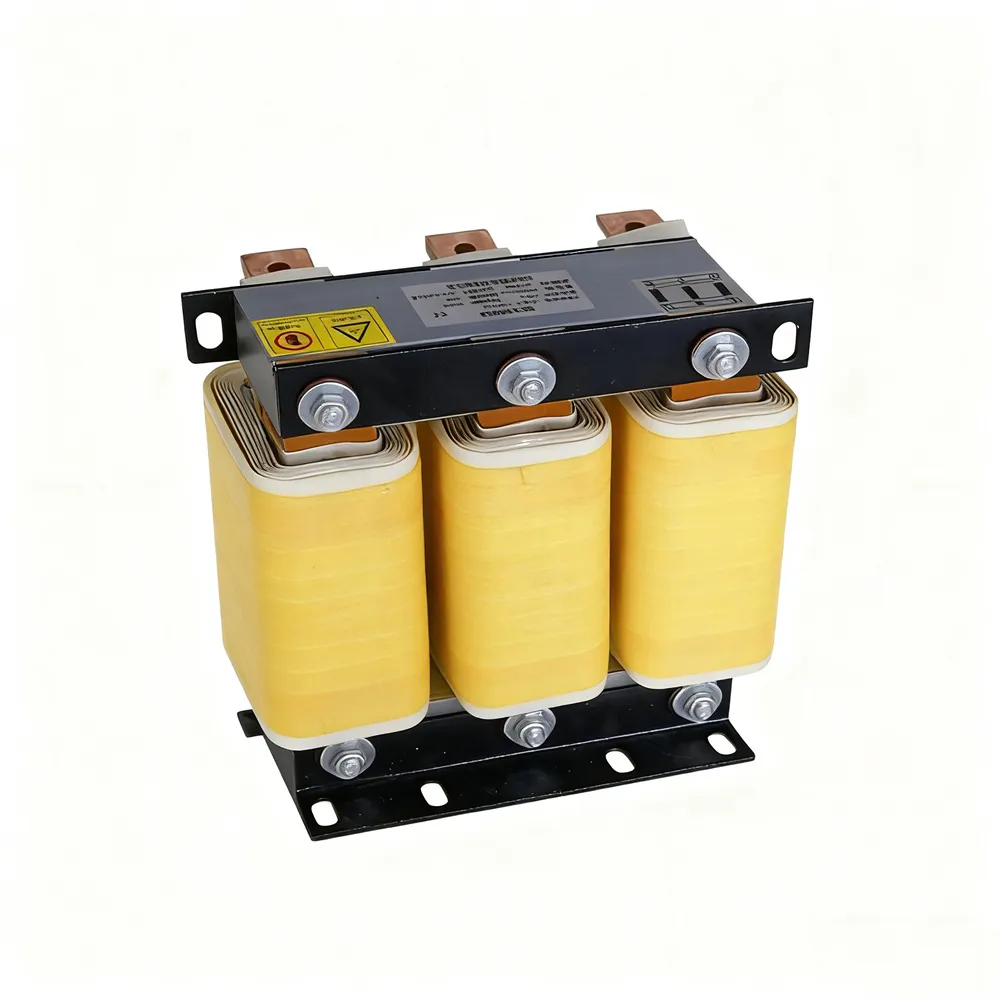
Line reactors are particularly suitable for automated production lines equipped with dense frequency converters, servo drives, and PLC control systems. Modern factories extensively use variable-frequency speed control equipment, which tends to generate harmonic interference during operation. This not only affects its own accuracy but also disturbs nearby instruments, sensors, and communication systems. Installing a line reactor effectively smooths current fluctuations, reduces harmonic interference to control signals, ensures accurate and consistent production line operation, and avoids downtime, malfunctions, or data anomalies caused by electromagnetic interference. It is especially ideal for high-stability automation scenarios such as auto parts manufacturing, 3C electronics, and packaging machinery.
High-power motor starting and operation represent another typical application for line reactors. High-power equipment including fans, water pumps, compressors, crushers, and conveyors generates large current surges during startup, which can cause sudden voltage drops and disrupt other equipment on the same circuit. A line reactor cushions startup shocks, lowers current peaks, reduces stress on the power grid and motor insulation, extends motor service life, and minimizes failures caused by frequent impacts. It is well-suited for industries with concentrated high-power loads such as mining, metallurgy, chemicals, and water treatment.
Line reactors become even more critical in areas with poor power quality, significant voltage fluctuations, and severe harmonic pollution. Environments such as old factory areas, peak-usage industrial parks, and remote power supply terminals often suffer from unstable voltage, high harmonics, and excessive noise interference, leading to equipment overheating, increased noise, and accelerated insulation aging. A line reactor effectively improves power quality, protects downstream precision equipment from harmonic damage, reduces failure rates and maintenance burdens, and enhances overall power safety and economic efficiency.
Scenarios demanding strict power quality - such as precision instruments, medical equipment, and data centers - also benefit greatly from line reactors. Equipment such as CT scanners, MRI machines, laboratory testing devices, servers, and switches is highly sensitive to current fluctuations and electromagnetic interference; even minor anomalies can result in data errors, equipment damage, or operational interruptions. A line reactor cleanses the input current, blocks external interference, ensures a stable and pure power supply, and maintains reliable operation of precision equipment.

Furthermore, in long-term, high-load, uninterrupted production scenarios - including chemical processing, metallurgy, glass manufacturing, and textile printing - line reactors reduce equipment heating and energy loss, improve operational efficiency, cut production losses from unexpected downtime, and significantly boost long-term economic benefits.
In summary, line reactors are suitable for various scenarios involving concentrated variable-frequency devices, heavy high-power loads, complex power grid environments, dense precision equipment, and continuous operation. Their core purpose is to protect equipment, stabilize operation, reduce failures, extend service life, and provide reliable operational support for all types of power systems.