


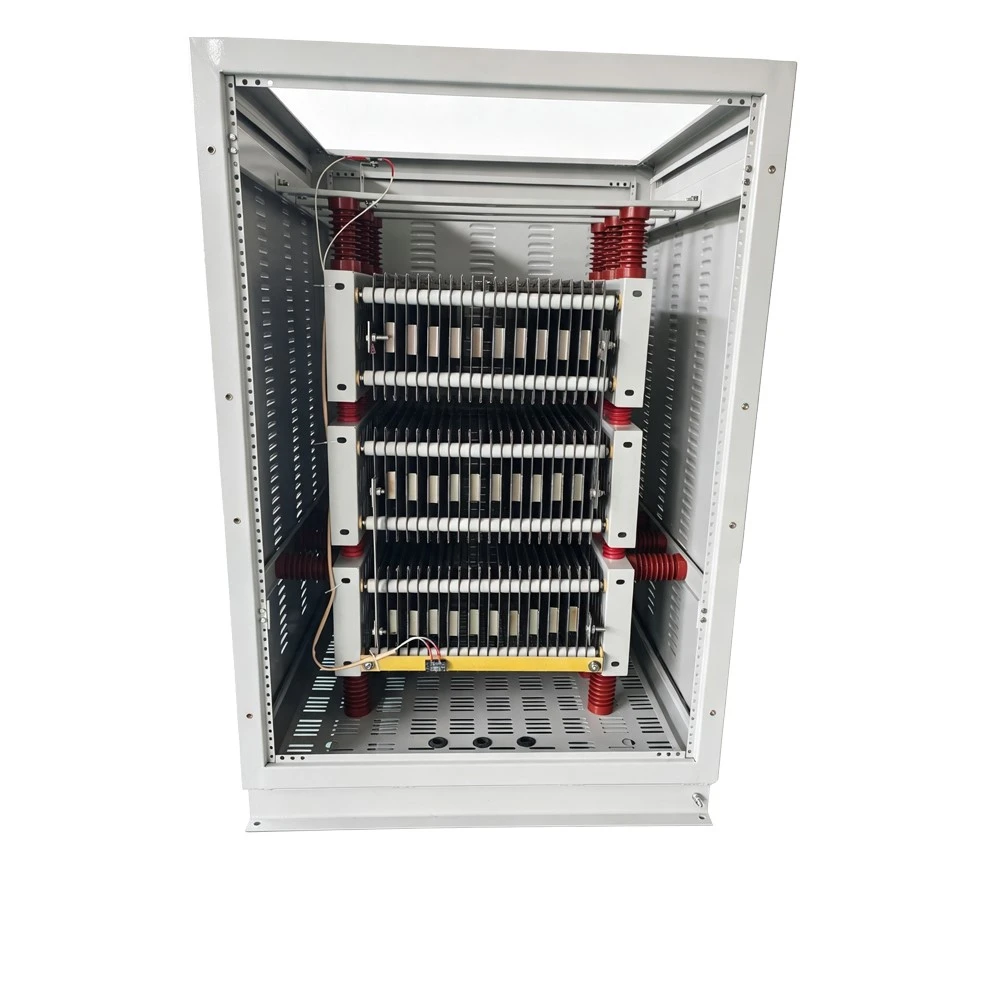
Neutral Grounding Resistor does not operate independently. It needs to cooperate with various core distribution, monitoring and protection devices to form a complete grounding‑protection system applicable to industrial plants, commercial buildings, municipal power distribution and new‑energy power stations. Each matching device performs its designated function and complements Neutral Grounding Resistor to deliver comprehensive power‑grid protection. Major matching equipment and their collaborative effects are outlined below.
Power transformers represent the most fundamental matching equipment. Dry‑type, oil‑immersed and box‑type transformers can connect Neutral Grounding Resistor to their high‑voltage or low‑voltage neutral points. As core units for voltage conversion and power transmission, transformers are susceptible to single‑phase earth faults and three‑phase imbalance. Connected to transformer neutral points, Neutral Grounding Resistor limits fault short‑circuit current, protects winding insulation from breakdown and burnout, stabilizes neutral‑point potential and prevents voltage offset and potential drift.
High‑voltage switchgears, low‑voltage distribution cabinets and ring main units constitute another set of key partners. Switchgears undertake power distribution, circuit switching and fault isolation as hubs of power‑distribution networks. Neutral Grounding Resistor is connected to the neutral‑point loop either inside or outside switchgears. When outgoing circuits suffer earth faults, Neutral Grounding Resistor limits current and reduces arc energy. It prevents severe accidents such as internal short‑circuits and busbar burnout, and coordinates with switchgear breaking functions to isolate faulty circuits while maintaining power supply for the rest of the grid.
Fault‑monitoring devices mainly include zero‑sequence current transformers and zero‑sequence voltage transformers. Neutral Grounding Resistor modifies fault current and voltage parameters during operation. Transformers collect real‑time zero‑sequence data and capture earth‑fault signals. Without such transformers, Neutral Grounding Resistor can only provide passive current limiting, and cannot support fault positioning or condition perception. Collected signals are transmitted to back‑end facilities and provide accurate data reference for fault judgment and condition monitoring, making grounding protection more precise and controllable.
Intelligent protection and monitoring hardware includes microcomputer comprehensive protection devices, fault recorders, power‑monitoring back‑ends and intelligent measurement‑control terminals. Receiving current and voltage signals from transformers, microcomputer comprehensive protection devices identify fault categories and locations in combination with the current‑limiting performance of Neutral Grounding Resistor, and activate alarms or delayed tripping to contain fault expansion. Fault recorders record current, voltage and resistor status at fault moments and supply data for fault review and system optimization. Power‑monitoring systems support remote real‑time status observation and unattended intelligent operation and maintenance.
In new‑energy scenarios, Neutral Grounding Resistor is frequently matched with inverters, box‑type transformers and combiner cabinets for photovoltaic and wind‑power generation systems. It addresses prominent problems including harmonic distortion, voltage fluctuation and frequent earth faults in new‑energy grids. For high‑risk industrial sites, it can also work with lightning‑protection grounding facilities and static‑elimination equipment to achieve multi‑layer protection against lightning, static electricity and earth faults, and adapt to diversified power‑distribution requirements across different application scenarios.