


Stainless Steel Braking Resistor Units possess remarkable ambient‑temperature adaptability. Strict thermal limitations are not imposed for regular industrial and civil‑use scenarios. They cope with cold winters, normal‑temperature workshops and hot summer conditions across most geographical regions. Routine temperature fluctuations barely affect their working performance, service life or safety. Deployment is feasible for indoor, outdoor, humid‑southern and frigid‑northern sites.
In low‑temperature conditions, their performance stays competitive. They handle ambient temperatures as low as ‑20℃. For unheated workshops, open‑air machinery and cold‑storage auxiliary equipment in northern winter, stainless‑steel material retains good low‑temperature toughness. Brittleness, hardening and structural deformation seen for ordinary steel will not happen. Resistance characteristics, heat‑dissipation behavior and braking‑energy‑consumption capacity remain completely functional. Startup failure and braking malfunction triggered by cold weather will not occur. Stable start‑stop and braking cycles are guaranteed under frigid outdoor conditions.
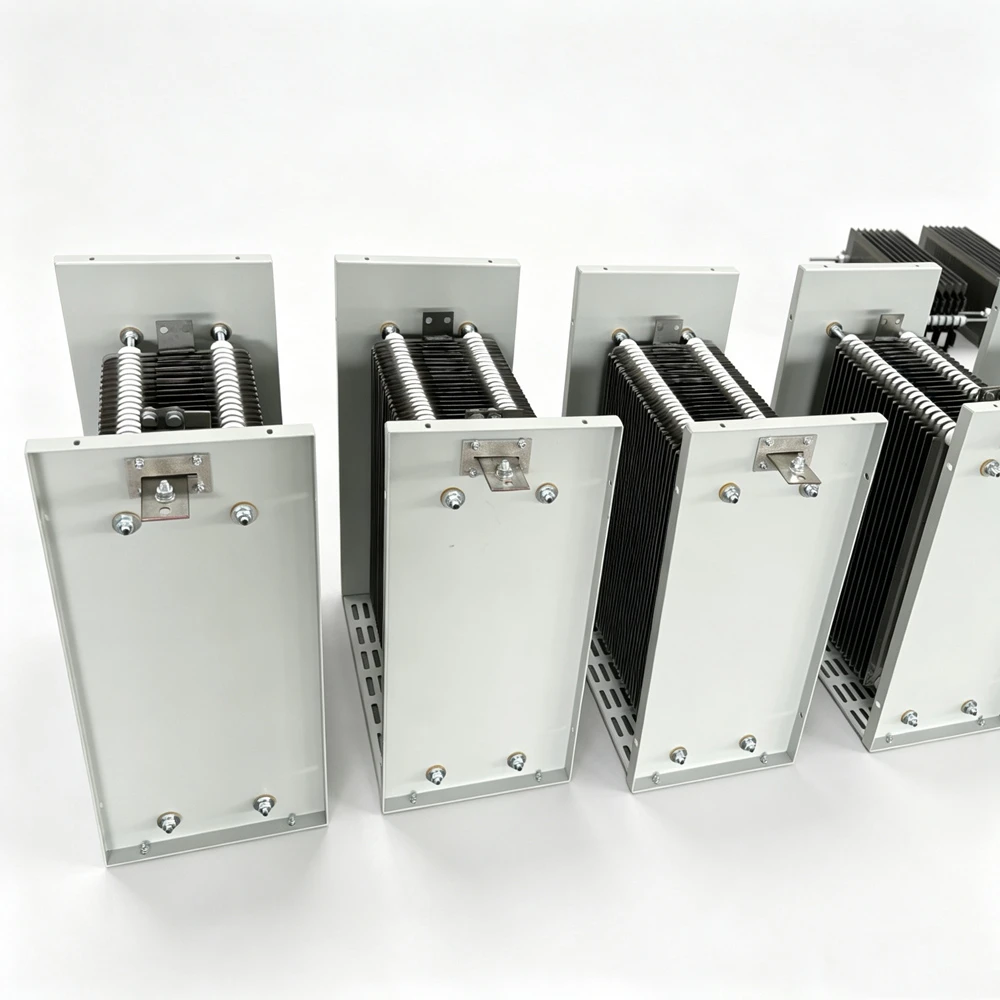
Ambient temperatures between 0℃ and 40℃ represent the optimal working scope. Heat‑exchange efficiency reaches its best state within this band. Temperature rise develops gently and energy‑conversion performance stays consistent. Long‑duration continuous operation and frequent braking cycles can be supported without anomalies. Maximum service life can be achieved. This temperature range covers most factory workshops, buildings and equipment‑room environments, so temperature‑related concerns hardly exist.
For high‑temperature surroundings, long‑term operation under ambient temperature up to 60℃ is supported. It fits hot summer open‑air sites and thermally‑intensive production workshops. Ordinary resistors easily suffer overheating, aging and sharp performance drops under such thermal conditions. Stainless Steel Braking Resistor Units feature excellent substrate heat resistance. Electrical parameters stay stable even when surrounding temperature rises. Heat‑transfer capacity will not deteriorate significantly. Braking‑related energy conversion and heat dissipation proceed normally without over‑temperature shutdown or braking failure.
It is worth distinguishing ambient surrounding temperature from self‑generated operating temperature. Heat produced by the units themselves during work is a normal physical phenomenon and is not restricted by environmental thermal conditions. Special attention should be paid to superposition of extreme factors. If ambient temperature persistently exceeds 60℃ together with prolonged heavy‑duty high‑frequency braking, cumulative heat build‑up may slightly shorten service life. Optimizing local heat‑dissipation layout is sufficient for such extreme scenarios.
Overall, Stainless Steel Braking Resistor Units show great tolerance for surrounding‑temperature changes. No functional failure occurs in cold weather, and breakdown will not take place under high‑temperature surroundings. Their temperature‑adaptation performance surpasses conventional braking resistors substantially. They meet thermal‑condition requirements for industrial and civil‑use equipment in different regions. Extra configuration adjustments targeting temperature differences are generally unnecessary.