


With standard installation and normal working conditions, frequency sensitive rheostats will not produce obvious vibration, shaking or wobbling. The whole machine operates stably and firmly with outstanding vibration resistance, making it highly stable electrical control supporting equipment suitable for complex industrial environments with vibration.
In terms of structural principles, the frequency sensitive rheostat is a purely static fixed device composed of iron cores, coils, fixed brackets and insulating accessories, featuring compact structure and strong rigidity. No moving parts such as motors, bearings, gears, connecting rods, movable contacts or sliding mechanisms are installed inside. There are no mechanical rotation, reciprocating movement or opening-closing collision actions during operation. The equipment only undergoes internal electromagnetic energy conversion without macroscopic mechanical motion, which fundamentally eliminates the possibility of inherent vibration.
When powered on, the equipment body stays completely static. No vibration can be perceived visually or by touch. There will be no periodic shaking, wobbling or resonance. The equipment maintains stable performance over long continuous operation. Vibration will not cause faults such as loose screws, falling-off wires or displaced components, bringing much better reliability and durability than electrical control equipment with dynamic moving structures.
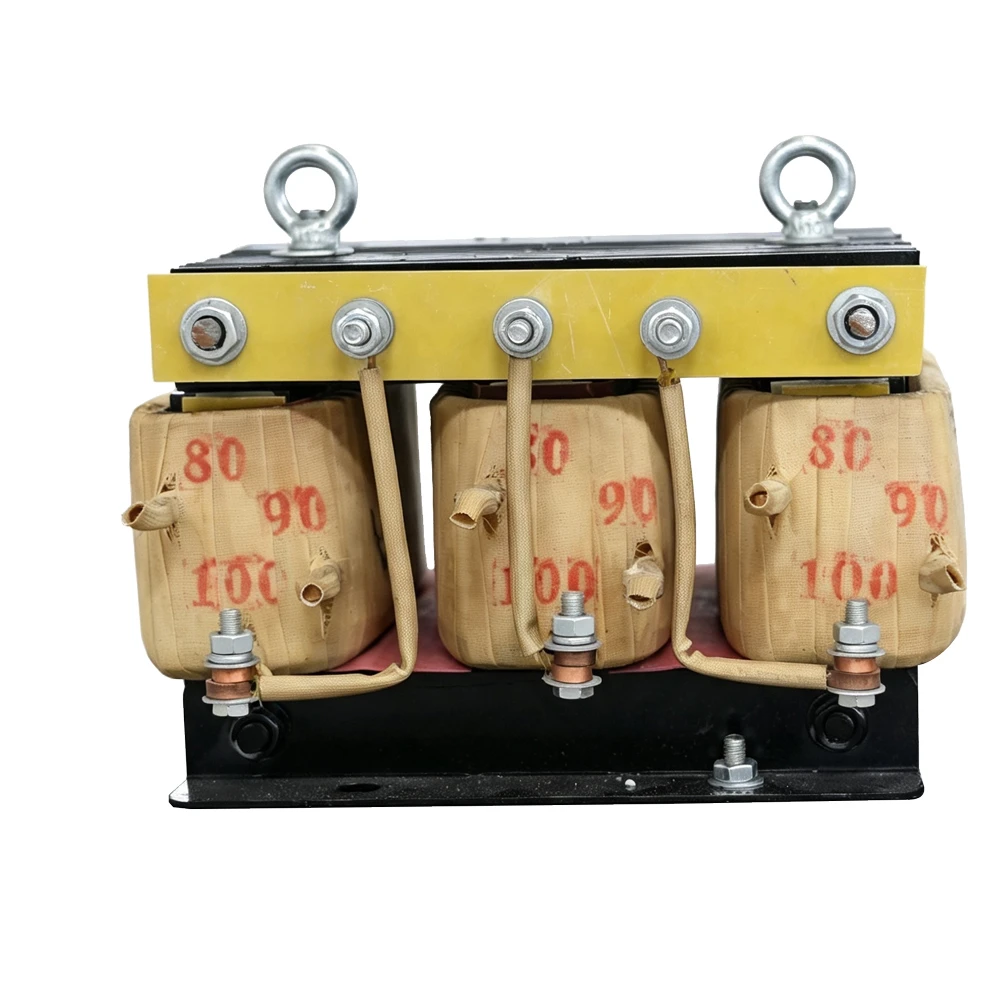
Slight vibration perceived by some users on site is not produced by the frequency sensitive rheostat itself but transmitted vibration from the environment. Large equipment in industrial workshops such as crushers, fans, travelling cranes and large water pumps have high power and intense mechanical movement. They generate basic ground vibration during operation, which transfers to the frequency sensitive rheostat through supports and bases, leading users to mistakenly think the equipment vibrates on its own.
Such externally transmitted vibration has low amplitude and stable frequency. It will not exert any impact on the structure, performance or electrical parameters of the frequency sensitive rheostat, nor affect normal startup and operation of the equipment or accelerate aging and damage. Meanwhile, the product adopts reinforced structural design before delivery, featuring rigid brackets and compact overall construction. It has good resistance to resonance and transmitted vibration and can maintain stable operation even in workshops with heavy vibration.
On the whole, frequency sensitive rheostats produce no self-generated vibration, have strong anti-vibration capacity and operate stably. There are no hidden faults caused by vibration. They can adapt to various heavy industrial production sites with high vibration and high working intensity for long-term stable and reliable operation.