


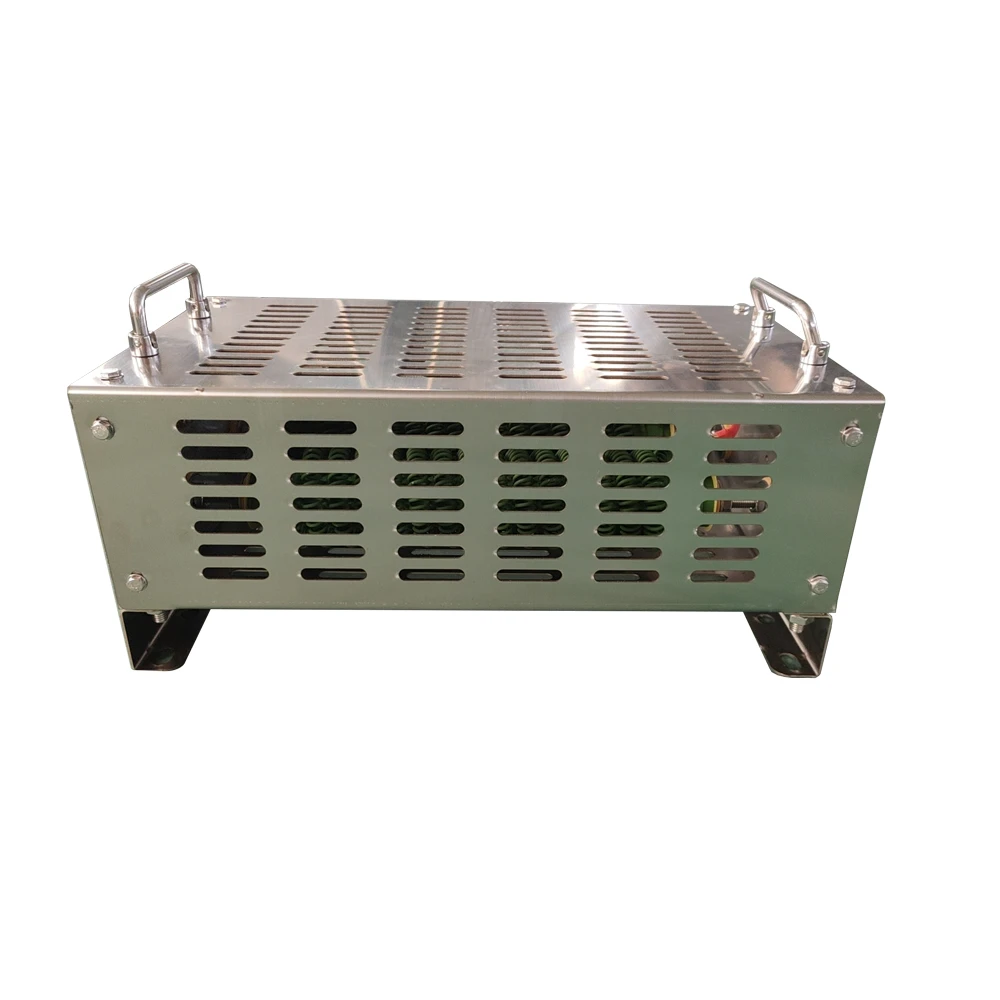
A Braking Resistor Box is a commonly used auxiliary electrical device in industrial motor drive systems. Its main advantages include regenerative energy dissipation, braking assistance, voltage control, and broad application versatility. In applications involving frequent motor deceleration, rapid stopping, or external load forces, a Braking Resistor Box helps the system handle regenerative energy and supports stable equipment operation.
First, it provides effective regenerative energy dissipation. During motor deceleration, the kinetic energy of the mechanical system may be converted into electrical energy through the motor and fed back into the VFD's DC bus. A Braking Resistor Box converts this excess electrical energy into heat and releases it into the surrounding environment. This prevents energy from continuously accumulating in the DC bus and helps maintain normal drive system operation.
Second, it helps improve braking performance. For industrial equipment that requires rapid deceleration and frequent starting and stopping, natural deceleration alone may not satisfy production requirements. A Braking Resistor Box works together with the VFD and braking unit to provide a path for dissipating regenerative energy. This allows the motor to decelerate and stop according to the control requirements.
Third, it helps reduce the risk of VFD overvoltage. When regenerative energy generated by the motor cannot be dissipated promptly, the DC bus voltage may rise and trigger overvoltage protection. By consuming excess electrical energy, a Braking Resistor Box helps control the DC bus voltage and reduce protective shutdowns caused by energy accumulation, contributing to more continuous equipment operation.
Fourth, it offers good adaptability to various industrial applications. Braking Resistor Boxes can be used in different motor drive systems, including cranes, elevators, conveyor equipment, centrifugal machinery, automated production lines, and other industrial machines. These applications may involve high inertia, frequent starting and stopping, or significant load variations. A Braking Resistor Box can provide braking assistance according to the requirements of the system.
Fifth, it helps improve system operating stability. In continuous production environments, motor deceleration and stopping need to remain relatively stable. If regenerative energy is not handled properly, the VFD may generate alarms or cause unexpected equipment shutdowns. Properly configuring a Braking Resistor Box helps improve energy management during braking and supports continuous equipment operation.
Sixth, its structural design is practical. A Braking Resistor Box generally houses resistor elements and related connection components within an enclosure, making installation, wiring, and routine inspection more convenient. Some products also incorporate ventilation and protective structures according to their intended operating environments, helping meet the requirements of different industrial applications.
In addition, a Braking Resistor Box can work with different types of VFDs and motor control systems, providing a flexible solution for industrial braking applications. However, the specific application should be selected according to the VFD's capabilities, load characteristics, and braking requirements.
It is important to note that a Braking Resistor Box is primarily responsible for dissipating regenerative energy. It does not directly replace other protective devices in the motor control system or mechanical braking mechanisms. In practical applications, it should work together with the appropriate electrical control and safety protection systems.
Overall, the main advantages of a Braking Resistor Box include effective regenerative energy dissipation, improved braking performance, reduced DC bus overvoltage risk, broad application versatility, and convenient installation and maintenance. These features make it a valuable auxiliary device for various industrial motor drive systems.