


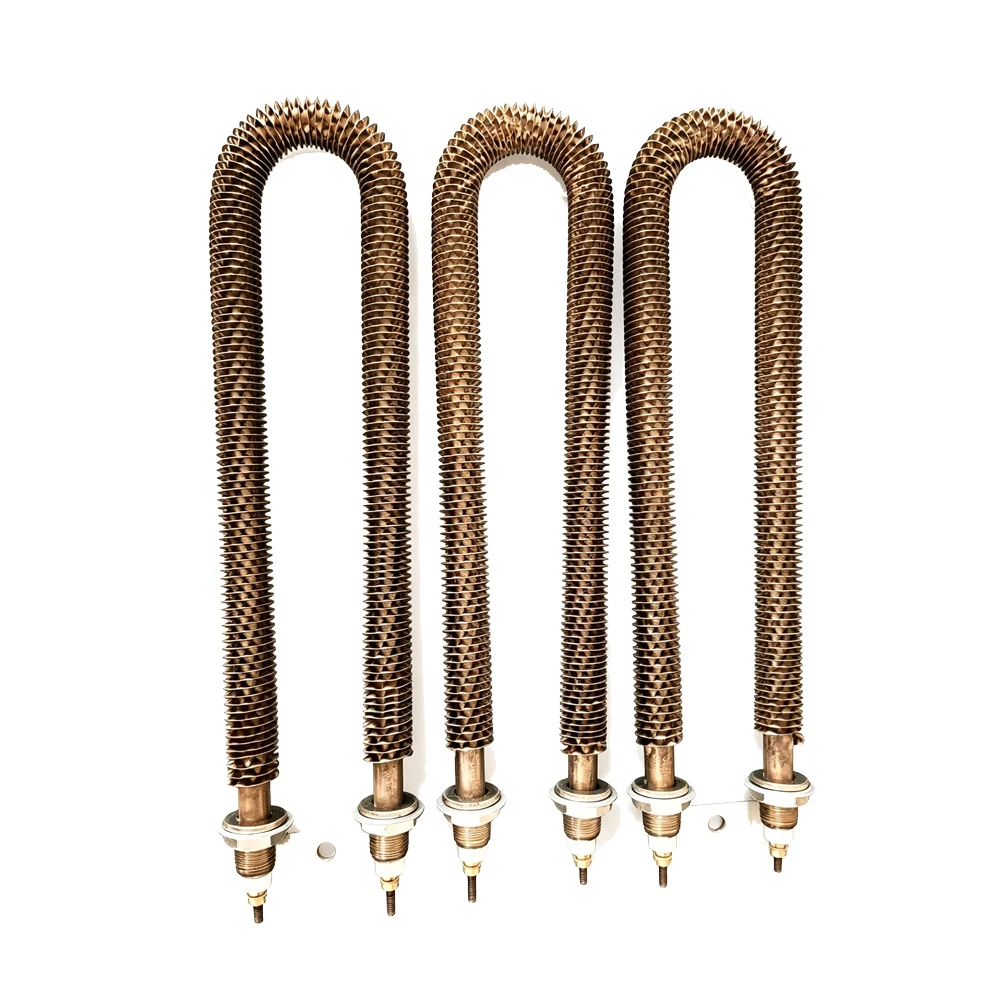
Relying on the core principle of heat generation via electrified resistance, Heating Element Resistor features strong adaptability, flexible installation and stable operating conditions. It is the most prevalent electric heating element for civil, commercial and industrial fields, covering fluid heating, air heating, mold heating, constant temperature control and other full-range scenarios with an extensive range of subdivided applications. Civil household scenarios constitute its basic application field, and nearly all conventional electric heating home appliances are fitted with it. Among daily kitchen and bathroom appliances, electric water heaters, instant hot water dispensers, electric kettles, steam ovens, disinfection cabinets and dishwashers represent core applied devices. These devices mainly rely on it for rapid heating of water and cavity air to satisfy household demands for drinking water, cleaning and cooking. For indoor heating and healthcare equipment, indoor electric heaters, skirting heaters, bathroom heaters and foot bath units all depend on Heating Element Resistor to deliver constant-temperature heat output with stable temperature control, suiting low-voltage power environments for daily use.
Commercial scenarios focus on small and medium-sized operating equipment requiring stable durability and low-cost operation and maintenance. In the catering industry, commercial water boilers, noodle cooking stoves, heat preservation soup tanks, baking proofing boxes and commercial ovens require continuous constant-temperature heating. Heating Element Resistor can operate continuously for extended hours and adapt to high-frequency usage scenarios. Hot air drying equipment, constant-temperature storage cabinets and compact medical disinfection equipment used in supermarkets, offices and medical facilities also commonly adopt this component to meet clean and stable heating requirements. In addition, water constant-temperature equipment for aquaculture and garden anti-freezing heating units can be equipped with waterproof Heating Element Resistor to adapt to humid special outdoor environments.
Industrial scenarios serve as the core high-end application field of Heating Element Resistor, accommodating complex and high-intensity working conditions. In mechanical processing, mold heating for injection molding machines, preheating of die-casting machines and machine tool oil preheating equipment utilize Heating Element Resistor for precise temperature control to guarantee processing accuracy. In drying applications, industrial drying assembly lines, material drying ovens, powder drying equipment and agricultural product drying facilities adopt multiple sets of Heating Element Resistor to achieve large-area and uniform hot air heating. For fluid heating, pipeline heating equipment, water tank heat storage devices and heat conduction oil heating equipment can heat water, oil, gas and other media for chemical, building material and food processing industries. Besides, Heating Element Resistor is widely deployed in industrial anti-freezing, equipment preheating, computer room constant temperature and other auxiliary scenarios. Thanks to its high adaptability and stability, it ranks among the preferred electric heating components for industrial heating.