


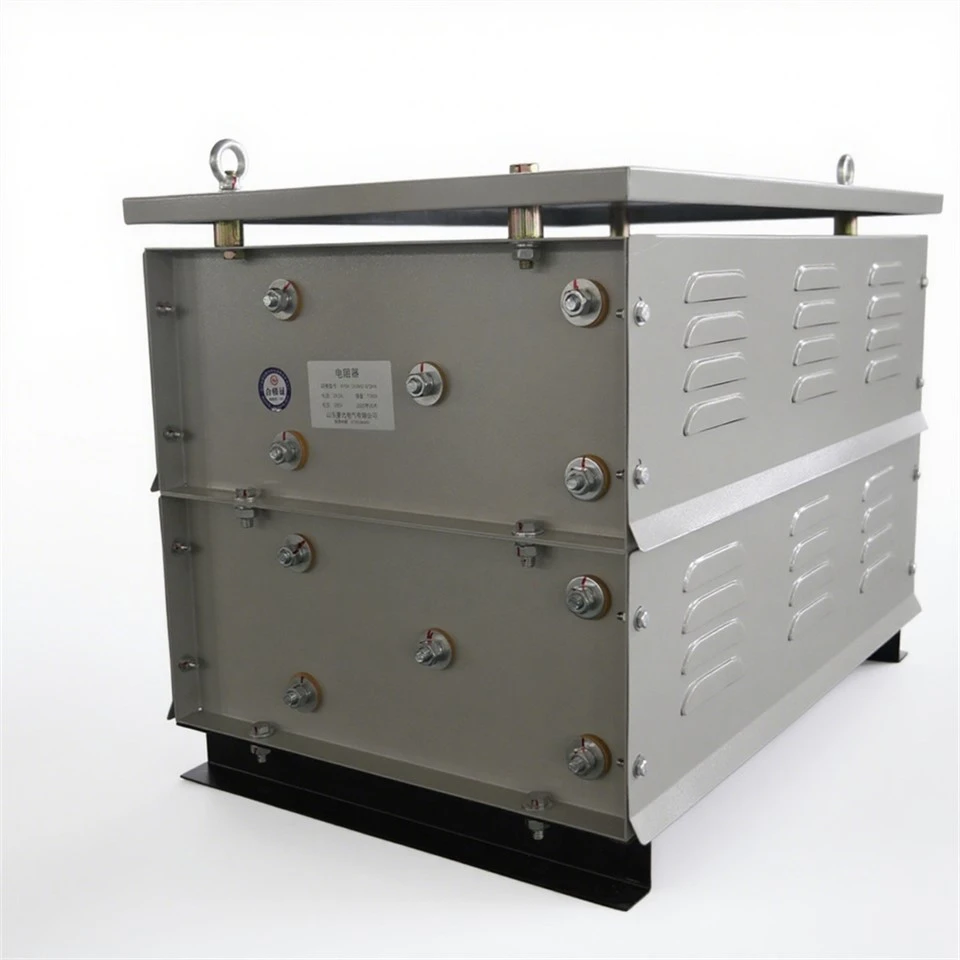
Products Description
Industrial Braking Resistor is a dedicated energy-dissipating component for variable-frequency drive systems. It is widely deployed in automated production lines including machine tools, belt conveyors, mixing equipment and lifting machinery. When equipment decelerates or heavy loads descend, motors generate reverse regenerative energy that elevates the DC bus voltage of frequency converters. The braking resistor rapidly absorbs and dissipates surplus electric energy to stabilize circuit voltage. The complete assembly uses corrosion-resistant alloy resistance strips paired with metal heat dissipation housings and optimized heat dissipation air ducts. It supports continuous long-term operation at 120℃, featuring robust resistance to current surges, high ingress protection ratings, and a compact footprint for easy installation. It effectively prevents damage to electrical control components from overvoltage and guarantees smooth equipment braking.
Product Advantages
Efficient Heat Dissipation
An optimized heat dissipation structural design enables rapid outward thermal conduction, maintaining stable operating status even after prolonged continuous operation.
Superior Environmental Resistance
All integral components receive specialized protective surface treatment, supporting stable long-term operation in complex industrial environments with heavy dust and moderate humidity.


Smooth Stable Operation
Resistance values exhibit minimal fluctuation during operation, delivering seamless, impact-free braking without additional electrical interference to peripheral circuits.
High Safety & Reliability
Multiple built-in flame-retardant protection mechanisms maintain stable performance under abnormal operating conditions, drastically reducing equipment safety risks.
Application Scope
Lifting Equipment
Suitable for potential-energy load machinery such as overhead cranes and material hoists, ensuring smooth deceleration and precise positioning during load lowering.
01
Conveying Equipment
Applied to belt conveyors and material transfer systems to prevent load slippage and inertial coasting during heavy-load startup and shutdown.
02
Precision Machine Tools
Matched with the transmission systems of all precision machining tools to enable rapid, accurate spindle shutdown and improve machining positioning precision.
03
Rail Transit Systems
Adapted to the braking assemblies of locomotives and rail vehicles, assisting in dissipating surplus regenerative energy generated during deceleration.
04
Manufacturing Technology
Neat precision winding technology is adopted, with resistance wire laid evenly to avoid localized overheating and guarantee uniform heat generation across the full unit.
A high-temperature-resistant flame-retardant protective coating is sprayed onto all external surfaces to isolate resistance wire from oxidative air exposure and drastically extend its service life.
Specialized sealing technology is applied to all wiring and joint positions, preventing dust and moisture intrusion and eliminating electrical faults stemming from poor contact.
Outer protective casings use integrated one-piece forming technology, delivering high structural rigidity and excellent vibration resistance for long-term operation under bumpy working conditions.
Multiple rounds of thermal cycling calibration are performed during production to ensure resistance values remain within stable rated ranges across all operating temperature bands.
FAQ
Q: Will frequent startup-shutdown and braking cycles shorten the service life of Industrial Braking Resistor?
A: This product is engineered specifically for operating scenarios featuring repeated startup-shutdown and frequent braking. Wear accumulates gradually under daily high-frequency braking cycles, delivering consistent long-term service life. When operated within standard rated conditions, daily repeated braking will not trigger rapid aging or measurable performance degradation, allowing long-term stable coordination with host equipment.
Q: The surface reaches very high temperatures during operation. Will accidental contact cause scald injuries?
A: The resistor body temperature rises noticeably while active operation is underway. Bare-handed direct contact with the equipment casing should be avoided during operation. After the equipment ceases braking and rests for a short interval, surface temperatures drop rapidly to a safe level with zero scald risk upon contact. Standardized daily operating procedures effectively eliminate hidden risks of accidental collision and thermal burns.
Q: Will performance be impaired in workshop environments with airborne dust and mild moisture?
A: The exterior surface of Industrial Braking Resistor receives full protective coating treatment. Ordinary airborne dust and mild humid air inside workshops will not disrupt normal operating performance. Minor amounts of dust and moisture present in typical factory environments cannot corrode internal core components, and no operational malfunctions will arise from slight ambient humidity or accumulated dust.
Factory Environment


Hot Tags: industrial braking resistor, China industrial braking resistor manufacturers, suppliers, factory, Aluminum Housed Resistor, Aluminum Shell Resistor, braking resistor, Corrugated Resistor, Spring Resistor, Stainless Steel Resistor


