


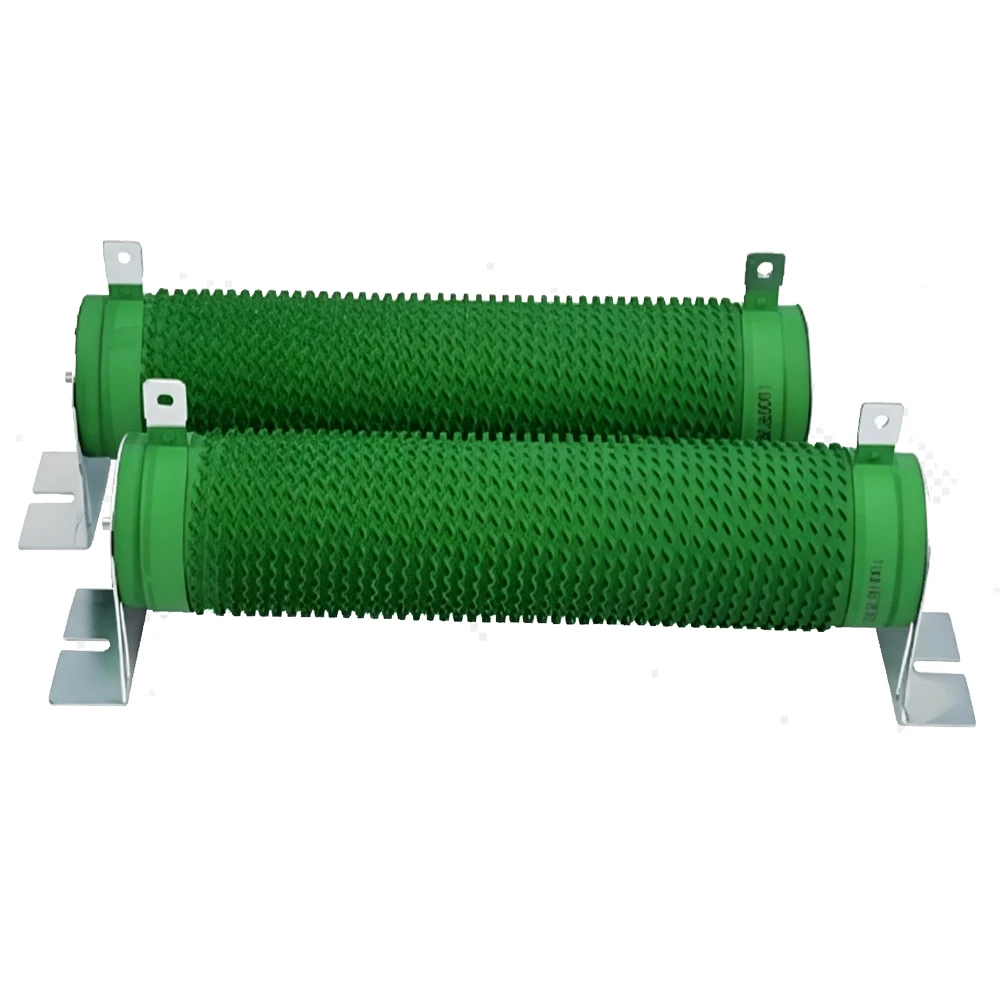
The working principle of a Corrugated Resistor is based on the resistance of its conductive material to the flow of electric current. When current passes through a resistive material, the movement of electric charges encounters resistance, causing electrical energy to be converted into heat. This process forms the basis for the Corrugated Resistor's functions, including current limiting, energy dissipation, and braking.
In practical electrical systems, a Corrugated Resistor is typically connected to a circuit to perform specific functions according to the equipment's operating requirements. For example, in a motor drive system, electrical energy may need to be dissipated when the motor decelerates or stops. With an appropriately designed circuit, the Corrugated Resistor can dissipate the electrical energy that needs to be released, converting it into heat and transferring it to the surrounding environment. This helps the control system achieve the required braking effect.
The operating performance of a Corrugated Resistor is influenced by factors such as circuit voltage, current, resistance, and operating duration. During circuit design, the resistor must be selected and applied according to the actual working conditions to ensure that it meets the equipment's operational requirements. A Corrugated Resistor does not perform all control functions independently. Instead, it works together with motor drives, control systems, and other electrical components to achieve the desired operating performance.
In addition to braking applications, a Corrugated Resistor can be used for current limiting, energy dissipation, and certain electrical control applications. In some systems, it helps restrict current or dissipate excess electrical energy, allowing other components to operate as intended. Its specific function depends on the circuit configuration, control method, and actual application environment.
A Corrugated Resistor generates heat during operation, making heat dissipation an important consideration. If heat cannot be released effectively, the resistor's temperature may continue to rise, potentially affecting its electrical performance and service life. Therefore, sufficient ventilation and heat-dissipation space should be provided during installation, and objects that may be damaged by heat should be kept away from the resistor.
The operating condition of a Corrugated Resistor can also be affected by connection reliability, ambient temperature, dust accumulation, and prolonged operating loads. During use, operators should check for abnormal heating, loose connections, visible damage, and other signs of malfunction. Necessary inspections and maintenance should be carried out according to the equipment's operating requirements.
In summary, a Corrugated Resistor converts electrical energy into heat to perform functions such as current limiting, energy dissipation, and braking. Understanding its working principle helps users arrange circuit connections, heat-dissipation conditions, and maintenance procedures appropriately, contributing to the stability and reliability of the entire electrical system.