


From the perspective of category, both frequency sensitive rheostats and ordinary resistors belong to circuit resistance elements with basic functions of current limiting and voltage division. Nevertheless, essential differences exist in working principles, operational characteristics, applicable working conditions and practical effects. This explains why heavy industrial fields generally abandon ordinary resistors and select frequency sensitive rheostats.
First of all, their working principles are completely different. Ordinary resistors rely on fixed resistance materials for current limiting, and their resistance is a constant value. The resistance parameter will not change with current, rotating speed or frequency regardless of whether the motor is in startup, acceleration or steady operation. They are passive fixed current-limiting elements unable to adapt to dynamically changing motor working demands.
Frequency sensitive rheostats work based on electromagnetic induction of ferromagnetic materials and possess the property of automatically changing resistance according to frequency. At the moment of motor startup, the current frequency is high, and the device automatically takes on high resistance to suppress surge current and buffer mechanical startup pressure. As the motor speeds up and operating frequency drops, the resistance decreases step by step without affecting motor output power and operational efficiency. The whole process adapts to motor working conditions automatically without manual intervention.
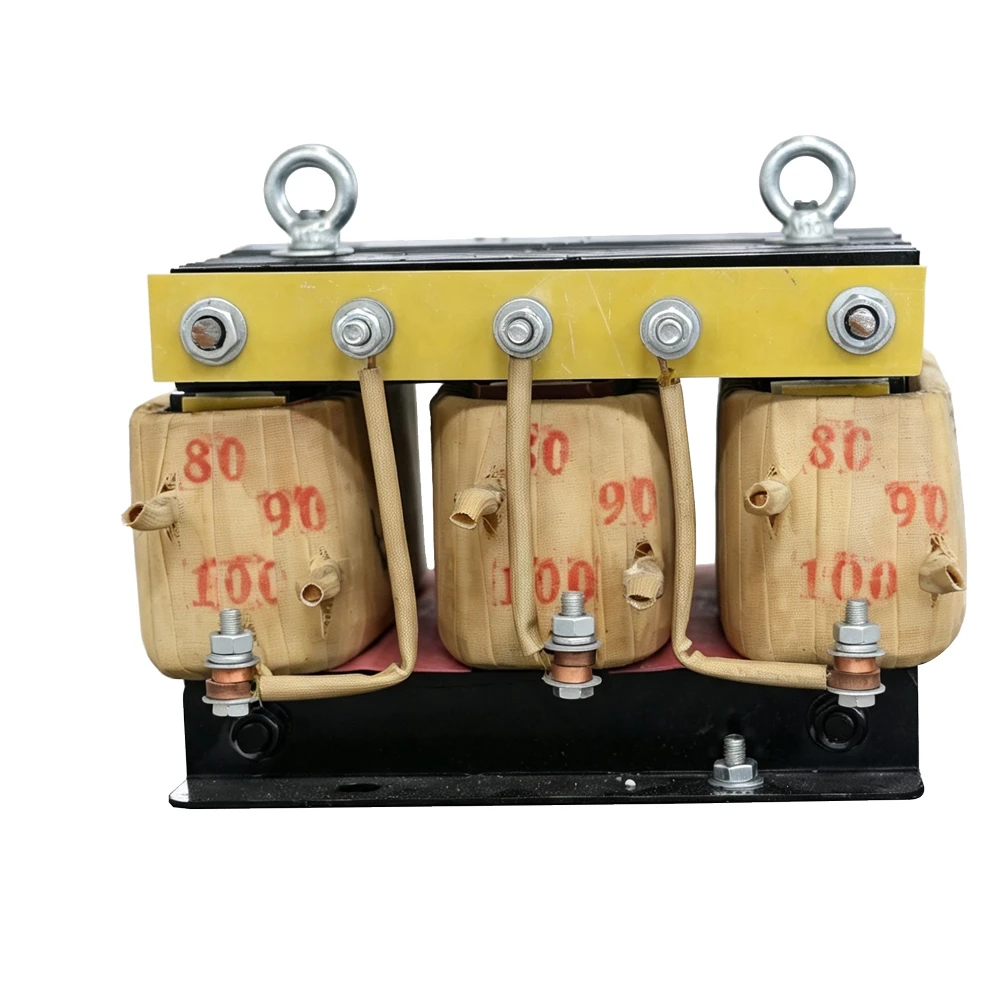
Secondly, their capacity to adapt to working conditions varies greatly. When ordinary resistors are used for heavy-duty motors, obvious contradictions emerge. Excessively high resistance will lead to weak motor startup, slow acceleration and difficulty in carrying loads. Too low resistance fails to restrain large startup current, leaving problems of impact tripping and motor heating unsolved. Therefore, ordinary resistors are only suitable for small circuits and light-duty equipment with fixed current limiting requirements, and cannot fit heavy industrial working conditions with frequent start-stop operations.
The frequency sensitive rheostat is specially designed for heavy-load startup of wound‑rotor motors. It perfectly adapts to industrial scenarios featuring frequent start-stop, forward-reverse switching and long continuous operation. The startup process proceeds gently and smoothly without impact from gear switching. It effectively protects motors, speed reducers, couplings and the whole transmission structure, greatly lowering mechanical fatigue and electrical loss.
In terms of maintenance, ordinary resistors suffer thermal aging, resistance drift and local burnout after long exposure to surge current, requiring frequent inspection and replacement. Frequency sensitive rheostats have no mechanical contacts or frequent wear and need no manual gear adjustment. Featuring stable structure and durability, they incur extremely low maintenance costs. In summary, although they share basic functions, the two products have totally different positioning. Ordinary resistors are general small parts, while frequency sensitive rheostats are special industrial equipment for adaptive heavy-load startup.