


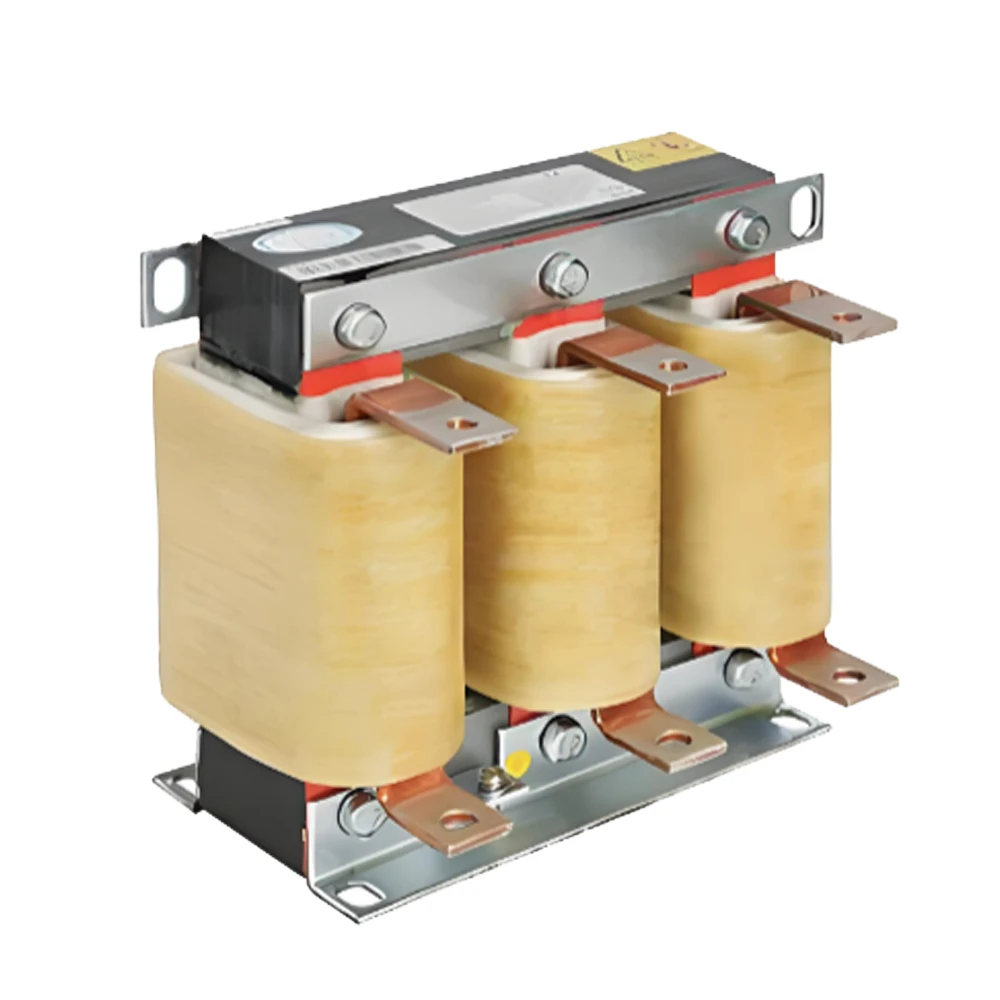
Power‑off operations for reactors are easily overlooked in daily maintenance. Most operators hold the view that reactors under no‑load standby bear no loads or hidden hazards, so frequent power‑offs are unnecessary. In reality, power‑off requirements differ across shutdown scenarios. Standardized power‑on and power‑off operations extend service life and mitigate safety risks. The following elaborates on relevant specifications, root causes and precautions against real‑world application backgrounds.
The core principle should be clarified first: reactors do not require power‑offs for every short‑term halt. Power disconnection is mandatory for long‑term idling, system shutdowns and abnormal operating conditions. Energized standby is acceptable for brief stops. When production pauses temporarily for several hours with stable plant power supply, no thunderstorms or gales, and no ongoing circuit maintenance, reactors may stay energized. Under no‑load‑standby status, reactors bear extremely low operating stress without overheating or overload risks. Repeated power cycling, on the contrary, produces voltage shocks and slightly damages coil insulation layers.
Certain scenarios definitely call for power‑cutting, which counts as a key point for routine maintenance. To start with, the power supply must be disconnected if reactors sit idle for more than 24 hours due to suspended production or halted workshop sections. Long‑term energized no‑load operation causes continuous tiny no‑load losses leading to unnecessary energy waste. Furthermore, coils under permanent electrification suffer gradual insulation aging, decreased voltage resistance and shortened overall service life. Second, complete power disconnection is compulsory for system and circuit maintenance. This fundamental safety rule prevents electric shocks induced by residual and inductive electricity and protects maintenance personnel.
Third, cut off power under severe weather and abnormal grid conditions. Instant high‑voltage and surge currents tend to emerge on power grids during thunderstorms, gales, grid‑voltage‑adjustment and circuit‑fluctuation events. Without load buffering, energized idle reactors suffer direct high‑voltage impacts on coil windings, which may easily result in insulation breakdown, inter‑turn short‑circuit, equipment burnout, abnormal noise and overheating. Fourth, the power supply shall be disconnected under abnormal surrounding conditions such as high workshop humidity, excessive dust concentration and nearby hot‑work welding. This prevents electric leakage, short‑circuit and ignition triggered by environmental factors.
Common misconceptions need to be addressed. Some users believe no heat or potential faults appear for no‑load reactors. In fact, continuously energized coils produce faint magnetic fields that attract dust and moisture in ambient air. Dirt and dampness accumulate on iron cores and coils, degrade heat dissipation and generate local overheating that gradually degrades equipment performance. Other operators perform excessive frequent power‑on and power‑off cycles. Transient‑current shocks from repeated switching harm insulation layers and accelerate aging.
In conclusion, the power supply can remain connected for short‑term shutdowns to avoid component damage caused by frequent switching. Power must be cut off for long‑term idling, maintenance work, severe weather and grid anomalies. Following standardized power‑off procedures eliminates safety hazards, reduces energy consumption, safeguards reactor coils and iron‑core structures, stabilizes operating performance, extends equipment service cycles and lowers failure probabilities.