


From the perspective of operating principles and hardware architecture, Stainless Steel Braking Resistors are purely passive power‑dissipation devices. Under standard normal‑operation conditions, they do not interfere with nearby electrical hardware, precision instruments or control systems. Within industrial‑control ecosystems, they rank among highly stable auxiliary components with strong anti‑interference characteristics, and are fit for installations demanding strict electromagnetic‑compatibility performance, including precision‑automation workstations, instrumentation assemblies, and weak‑current‑control environments.
Their interference‑free performance stems directly from their fundamental operating mechanism. Devoid of microchips, circuit boards and high‑frequency electronic elements, these resistors only execute physical conversion of electric energy into thermal energy during operation. There is no signal oscillation, no high‑frequency‑pulse generation, and no electromagnetic‑signal radiation. They do not produce common electrical‑interference phenomena such as electromagnetic radiation, radio‑frequency interference or harmonic distortion. Unlike active devices including frequency converters, contactors and relays - which generate electromagnetic disturbances - Stainless Steel Braking Resistors function solely as dissipative loads. Current flow remains stable, operating modes are simple, circuit waveforms remain undistorted, and no spurious noise signals are created. Accordingly, they do not degrade measurement accuracy for nearby sensors, encoders, PLC controllers, precision meters and other weak‑current‑based hardware.
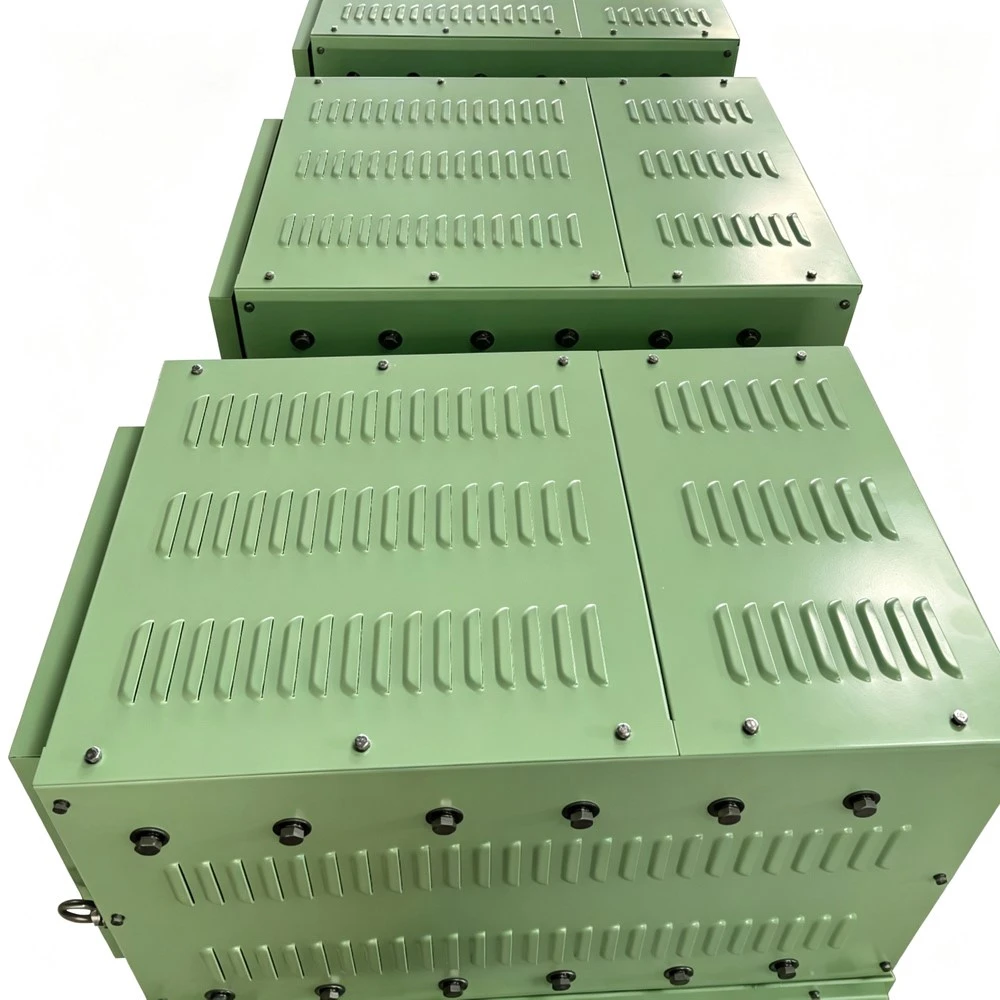
Nevertheless, minor interference can appear under non‑standard‑installation or fault‑state conditions. All such disturbances originate from external‑condition defects rather than inherent properties of the resistors themselves. First, improper wiring constitutes the primary interference trigger. Excessively long unshielded resistor power cables routed parallel to or bundled with weak‑current signal lines produce faint power‑frequency magnetic fields during operation. Superposition of these fields creates mild inductive interference on adjacent weak‑current signal conductors and causes signal jitter within precision equipment. Second, overload operation and hardware aging can induce interference. Sustained overload causes terminal overheating, oxidation and poor electrical contact, which produce intermittent arcing and sparking. Electric arcs radiate high‑frequency noise waves that disrupt nearby precision electrical equipment.
Third, inadequate earthing and damaged insulation also generate interference. Equipment leakage current and unstable reference potential introduce circuit noise and reduce control‑system‑signal fidelity. In addition, when resistors are mounted in overly close proximity to other hardware, long‑duration high‑temperature thermal baking affects surrounding units. While this involves no electromagnetic interference, it raises component temperatures and causes performance drift in precision instruments. This counts as physical‑environmental impact rather than electrical interference.
Complete interference elimination depends on observing basic installation and maintenance specifications. For cabling work, segregate high‑current and weak‑current circuits. Route braking‑resistor power cables separately from weak‑current signal wires and maintain safe separation gaps; shielded cables may be deployed where necessary. Ensure mechanically secure connections to prevent loose or incomplete contacts, and inspect terminals regularly for oxidation. Operate strictly within rated‑power limits and avoid overload and frequent emergency‑stop‑driven overload cycles. Implement dependable equipment earthing and insulation protection, and replace degraded insulating accessories on a periodic basis. Following standardized installation and maintenance, Stainless Steel Braking Resistors achieve zero‑interference operation. They integrate seamlessly into diverse precision‑manufacturing environments and exert no negative influence over the accuracy or stability of surrounding hardware.