


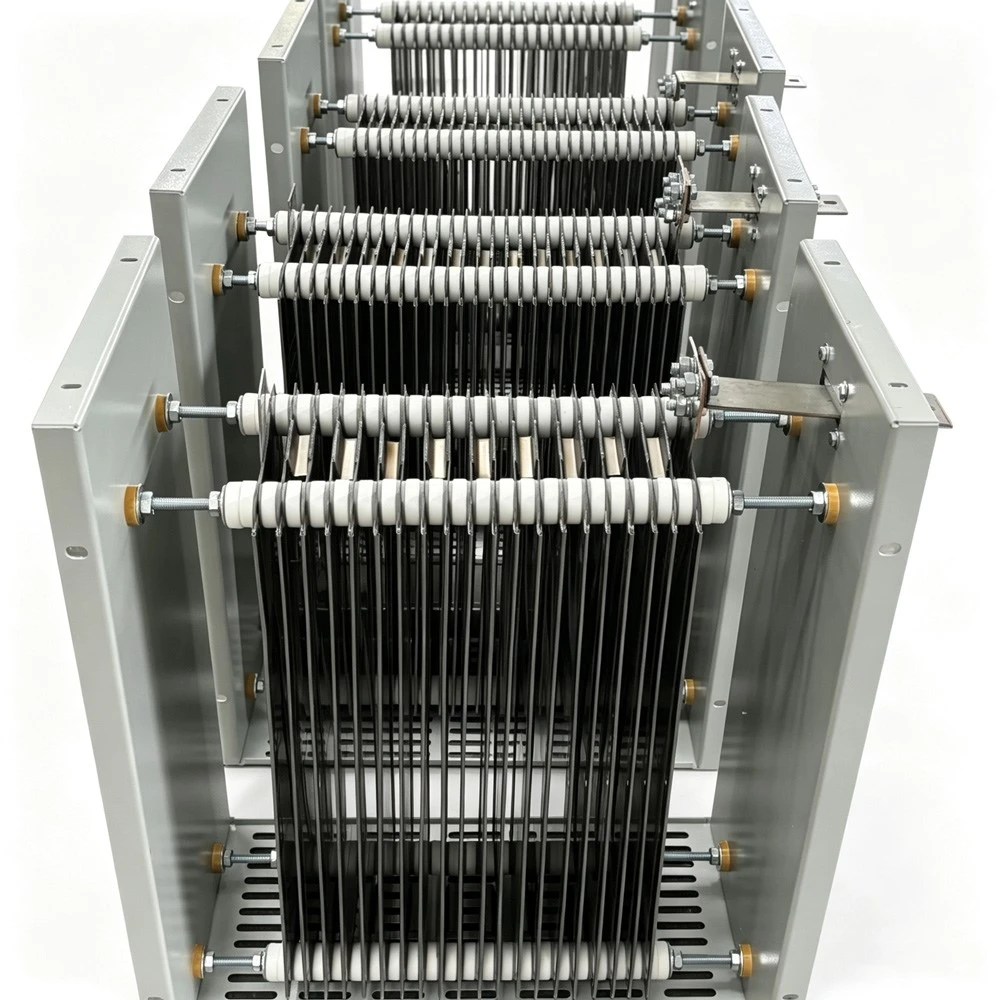
An Industrial Braking Resistor is mainly suitable for industrial equipment that requires deceleration, stopping, load changes, or frequent braking during operation. When equipment frequently needs to reduce its speed or stop quickly, the motor may generate excess energy during braking. This energy needs to be properly handled by the braking system, and an Industrial Braking Resistor can be used to dissipate this energy. Therefore, its application is closely related to the operating characteristics and braking requirements of the equipment.
Lifting equipment is one of the common application areas for Industrial Braking Resistors. During lifting, lowering, and moving operations, the load conditions of lifting equipment can change continuously. In particular, when a load is lowered or the equipment decelerates, the system needs to properly handle the energy generated during the process. An Industrial Braking Resistor can work together with the relevant drive system as part of the braking process, helping the equipment decelerate and stop more smoothly.
Conveyor systems are also suitable for applications involving Industrial Braking Resistors. Conveyors on production lines often need to start, stop, and adjust their speed according to production requirements. If the equipment has significant inertia, effective braking control may be required during stopping. An Industrial Braking Resistor can help dissipate the energy generated during braking and support a smoother deceleration process. This type of application can be particularly useful for conveyor systems that frequently change their operating conditions.
Elevator systems may also use Industrial Braking Resistors. During elevator operation, the elevator car and its load continuously change their state of motion, requiring acceleration, deceleration, and stopping according to operating conditions. The braking system needs to properly handle the energy generated during these changes. An Industrial Braking Resistor can serve as part of the relevant energy dissipation system and help maintain a stable braking process.
In addition to the equipment mentioned above, Industrial Braking Resistors may also be used in winding equipment, lifting systems, material handling equipment, and certain types of automated machinery. These types of equipment often have significant inertia or need to change their operating speed frequently. For example, winding equipment may need to continuously adjust its speed according to the production process. When rapid deceleration is required, the energy generated during braking needs to be properly handled, and an Industrial Braking Resistor can perform the corresponding energy dissipation function.
Some types of industrial machinery may also involve similar requirements. For example, production equipment may need to start and stop frequently, or its moving components may have considerable inertia. If the equipment relies solely on natural deceleration, the stopping process may not meet the actual operating requirements. In such cases, an Industrial Braking Resistor can be considered based on the equipment's drive system and braking requirements.
Overall, an Industrial Braking Resistor is particularly suitable for equipment that requires frequent deceleration, rapid stopping, significant load changes, or the handling of substantial operating inertia. Lifting equipment, conveyor systems, elevators, winding equipment, lifting systems, and certain types of automated machinery may all be suitable applications. In practical use, the equipment's operating characteristics and braking requirements should be evaluated comprehensively so that the Industrial Braking Resistor can work properly together with the overall drive system.