


Stainless Steel Braking Resistor Units operate quietly under regular industrial circumstances. They produce no disturbing noise and bring no acoustic interference to operators or surrounding machinery. Distinct from motors, fans and variable‑frequency converters, they suit office spaces, commercial buildings and precision workshops with strict noise‑control requirements.
Quiet performance originates from their mechanical‑free working principle. Stainless Steel Braking Resistor Units convert regenerative electric energy from motors into heat via inherent material properties. The whole energy‑conversion process is static electrical behavior. There are no gears, bearings, shafts or rotating accessories. No mechanical friction or vibration‑induced noise is generated. Neither electromagnetic resonance nor high‑frequency buzzing sound arises. That forms the foundation of their low‑noise performance.
Under regular working conditions such as routine elevator stops, conveyor speed adjustment and machine‑tool braking, Stainless Steel Braking Resistor Units run completely silent. Human operators standing nearby can hardly perceive any sound. They will not cause noise pollution for commercial, civil and precision‑industrial sites.
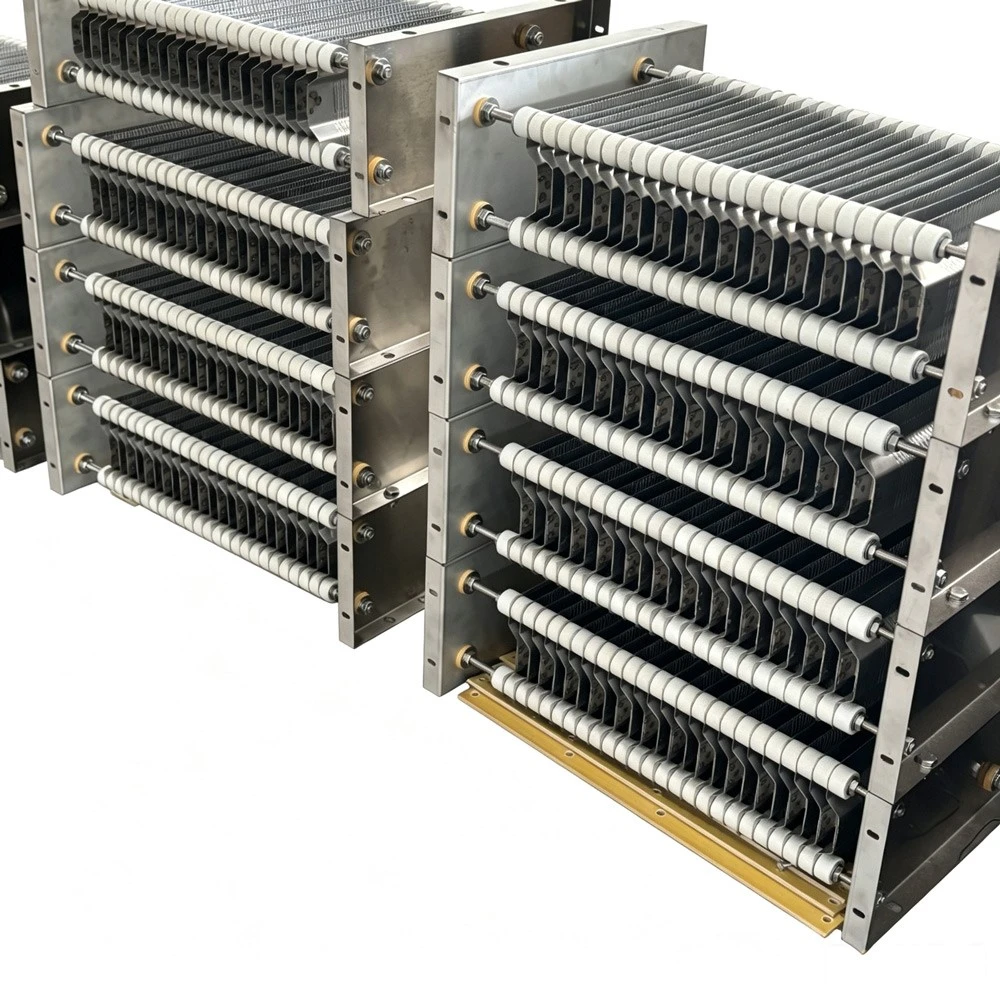
Faint audible sound may only emerge under extreme transient conditions and does not represent equipment failure. When heavy‑load machinery performs emergency high‑speed stops, large volumes of electric energy turn into heat instantly. Near‑by air expands rapidly and subtle airflow noise can be detected. Such sound is soft, short‑lived and can barely be heard one meter away from the units. It does not constitute noise pollution and will not interfere with on‑site work.
Compared with alternative braking resistors, Stainless Steel Braking Resistor Units show obvious advantages in noise suppression. Wire‑wound and cement resistors tend to produce resonance and persistent subtle rattling noises under high‑power operation. Some old‑style braking assemblies bring mechanical knocking noise. Thanks to integrated construction and stable material features, Stainless Steel Braking Resistor Units avoid resonance, deformation and loose‑part‑caused abnormal sounds. Quiet operation can be sustained.
Noise levels will not rise as service time accumulates. Aging‑related loose components bring increasing vibration noise for conventional resistors. Stainless‑steel‑based structures stay dimensionally stable. No abnormal noise will appear even under non‑stop high‑cycle operation. They reliably meet low‑noise requirements for various industrial and civil projects without concerns about acoustic pollution.